GDAŃSK, POLAND · 14–19 JUNE 2027 · Six days of live Sanomentology practitioner training GDAŃSK, POLAND 2027 · LIVE PRACTITIONER TRAINING Explore the trainingGdańsk 2027 · Book Live Training
Martin Rothery · Nine Realms Institute

I needed help. It wasn't there.

That is the short version of why I have spent most of my life trying to understand what actually changes people, rather than what merely gives us a good explanation for why they hurt.

Thirty-eight years later, I am still following the same question. I just have better maps now.
The beginning

I did not start with a theory. I started with a life I did not want to keep living.

I grew up in the foster system. By my teens I was carrying abandonment, anger, shame, isolation and chronic pain, along with the fairly convincing sense that none of this was heading anywhere especially good.

There was also a stubborn part of me that refused to accept that this had to be the whole story.

At sixteen I packed up what little life I had, stuck my thumb out and made my way across Europe to Rhodes.

I stayed in Greece for several years. I met people from different countries and backgrounds and began noticing how much human behaviour changes on the surface while repeating some remarkably familiar patterns underneath.

I returned to England on my twenty-first birthday with a great deal more experience of people and no miraculous solution to my own problems. The pain was still there. So was the anger.

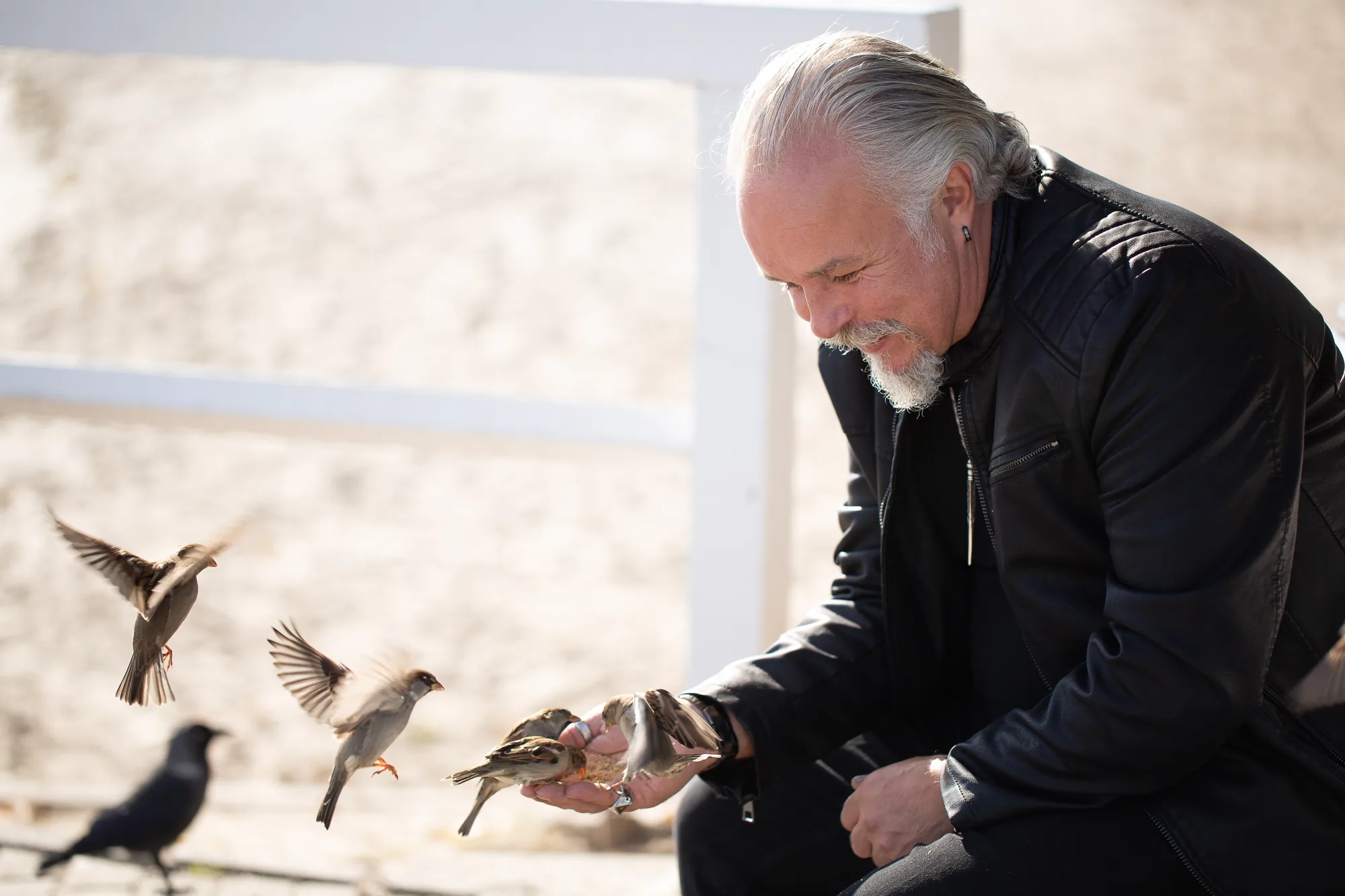
Martin Rothery feeding birds
A much later photograph, but the animal theme apparently survived.
Before any of this had a name

An old friend remembers the teenager who arrived in Rhodes.

Tasos Zachariou tells the story from the other side. He and his brother had just opened a small bar in Faliraki when a young English hitch-hiker walked through the door asking for work. They already had staff and could not really afford another person.

“One week later, he was running the place!”

According to Tasos, I became barman, DJ, PR, party organiser, interior improver and whatever else the bar needed. Within a few weeks the place was busier. His mother started sending food for “that English boy”, and even his father, who apparently had little enthusiasm for noisy young Englishmen, eventually started calling me by my name.

Then winter arrived

The tourists left. I did not. The family gave me a room above the closed bar and hotel, and I began going with Tasos to a small piece of land near Afantou where he kept chickens, turkeys, rabbits and ducks.

I helped carry feed, clean tanks, pick oranges and do the ordinary jobs. There was one line I would not cross: I would not kill the animals.

The animals were apparently less subtle

Tasos remembers twenty or more rabbits leaving their hay and sitting around me while I talked to them. At Christmas, his father's elderly cat Minou, who according to the family slept on nobody's lap except his father's, walked across the room, climbed onto mine and went to sleep. His father was not impressed.

That was when the joke began. “Martin is an animal guru.” By the following spring, Tasos says the birds and rabbits routinely came to me first even when he was the one carrying the food.

And then came the morning neither of us could explain

Tasos remembers collecting me one Sunday when I was unusually quiet and complaining of a headache and a strong sense that something was wrong. When we reached the farm, most of the birds had been killed overnight.

He assumed dogs. I told him I did not think it had been dogs and mentioned a nightmare I could not properly remember. A walk around the fence revealed a hole too small for a dog. A relative from the nearby village later told Tasos the attack sounded like a weasel.

I am not putting that story here as evidence of psychic powers, animal telepathy or anything else that requires a dramatic soundtrack. I do not know what happened. Tasos did not know either. That is actually the part I like.

Nearly three decades later, Tasos wrote that he still explains the world through experimentation, logic and observation, and that these memories remained difficult for him to fit into that framework. For me, they belong here for a simpler reason: long before Sanomentology, the Nine Realms or an Institute existed, I was already drawn to the things that did not fit neatly inside the explanation available.

The chronology matters

Sanomentology came first.

I do not want to rewrite the history backwards. Sanomentology was developed before the Nine Realms existed.

It grew from practical work with people and from trying to understand what was happening beneath the obvious story: subconscious structure, symbolic experience, identity, protective patterns, emotion, attention, expectation and meaning.

01
SanomentologyThe methodology developed from practical changework and the need for a deeper way of working with what maintains a problem.
02
The Nine RealmsThe work later became wider than one methodology. The Realms gave consciousness, identity, emotion, healing, liberation, human development, transformation and possibility a larger map.
03
Nine Realms InstituteThe Institute came later still as the home for the professional training, personal programmes, books, experiments and work still developing.
What I actually do now

There are several jobs hiding under one name.

They overlap, which is probably why I have never been particularly good at giving a neat answer when somebody asks what I do for a living.

PracticeI keep the theories answerable to real people and what actually changes in their lives.
TeachingI train practitioners to think beyond technique collecting and understand what they are looking at before deciding what to do.
WritingI write fiction and non-fiction because some ideas behave better inside stories than they do inside a training manual.
BuildingI keep developing the Institute because human experience has never shown much interest in staying inside one discipline.
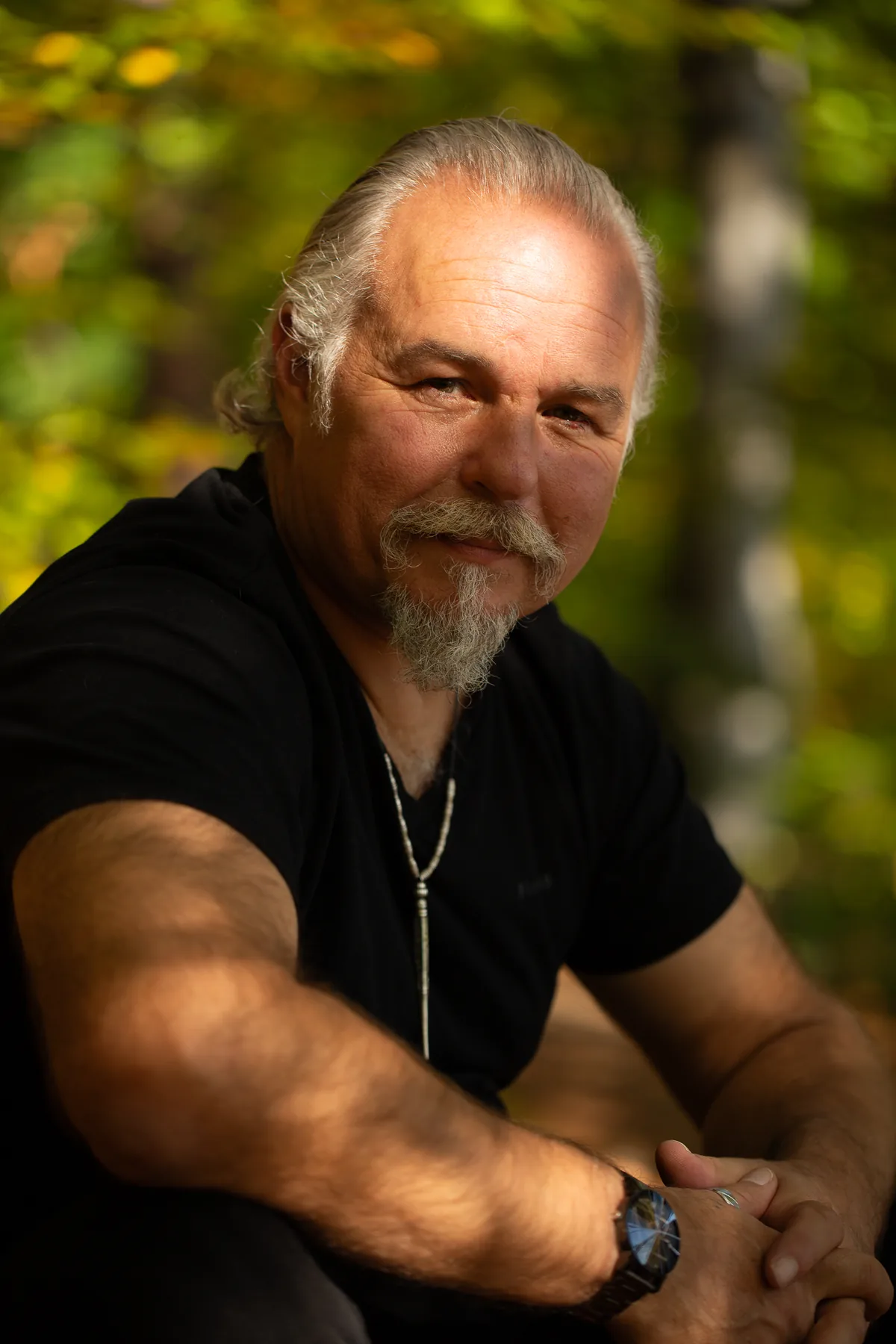
Martin Rothery outdoors
How I think about the work

I am sceptical enough to annoy believers and curious enough to annoy sceptics.

Use what is known.

Psychology, biology, neuroscience, clinical knowledge and accumulated practical experience all matter.

Do not worship the model.

A model is useful because it helps us see. The moment it becomes more important than the person, it has stopped being useful.

Leave room for what is unsettled.

Consciousness, intuition, altered states, synchronicity and unusual experience deserve careful thought rather than automatic belief or automatic ridicule.

Keep checking against reality.

If the theory repeatedly loses the argument with what actually happens, I change the theory.

What matters to me

Not corporate values. Things I actually try to live by.

These have been part of the work for years because they affect how I teach, what I build and what I am prepared to promise.

HonestyIf we cannot be truthful about what is happening, the rest becomes theatre.
FreedomI am not interested in replacing one guru, ideology or cage with another prettier one.
Big dreamsI have little enthusiasm for deciding in advance what a human being is allowed to become.
ResultsInteresting ideas are not enough. Something should become different in the life where the problem actually exists.
Self-discoveryChange becomes more useful when it increases your ability to see yourself clearly rather than making you more dependent on somebody else's interpretation.
Where to go from here

You do not need to understand everything I have built before you begin.

Start with the part that is relevant now. The rest can wait until curiosity gets the better of you.

Professional route

Sanomentology Practitioner Training

For people who want to learn the professional methodology and use it responsibly with others.

Personal route

Personal Change

Self-directed programmes for the parts of your own life that want attention.

The wider map

The Nine Realms

A wider way of seeing human experience when one explanation stops being enough.

Books

Fiction & non-fiction

Stories, ideas and the questions that became too interesting to leave alone.

Martin Rothery

Still curious. Still sceptical. Still building.

Thirty-eight years in, I have considerably better questions than I started with. I regard that as progress.